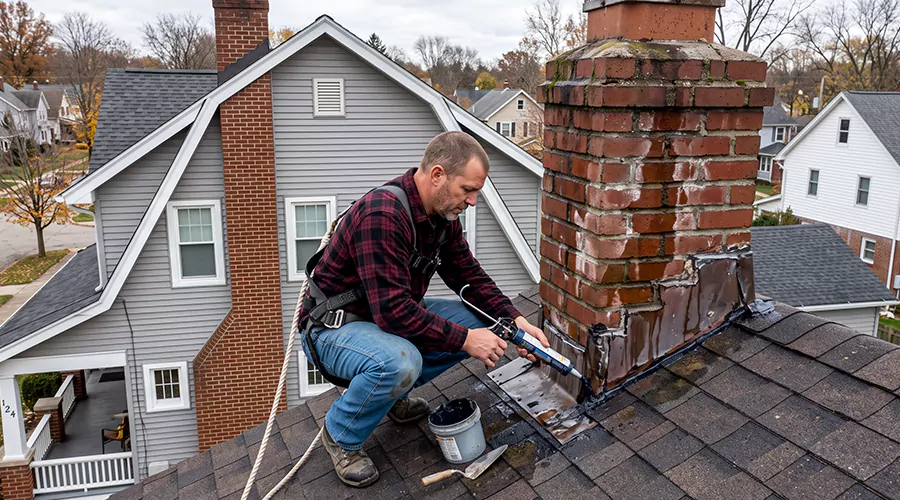
How to Stop Water Coming Down a Chimney
Rain entering a chimney is rarely solved by sealing stains. The real source is often a failed cap, crown, or flashing that needs inspection and repair.




Based on 500+ Reviews

Proudly American
Owned & Operated

Water coming down a chimney is a common problem that can cause damage to the fireplace, chimney structure, roof, and interior areas of a home. A chimney is designed to keep moisture outside, but damaged components such as the chimney cap, crown, flashing, masonry, or liner can allow water to enter.
Stopping water from coming down a chimney requires identifying the source of the leak and repairing the damaged area. Simply sealing visible water stains may not solve the problem because moisture can travel through hidden areas before appearing inside the home.
Water can enter a chimney through several different areas.
Common causes include:
Finding the exact source of the leak is the first step toward preventing further water damage.
The chimney cap is one of the first areas to check when water enters the chimney.
A chimney cap protects the chimney opening from:
A damaged or missing cap can allow water to fall directly into the chimney.
Common chimney cap problems include:
Replacing or repairing a damaged chimney cap can help prevent rainwater from entering through the top of the chimney.
The chimney crown sits at the top of many masonry chimneys and helps move water away from the chimney structure. When the cracked chimney crown develops, water can enter and travel downward through the chimney.
Common causes of chimney crown damage include:
Signs of crown damage include:
Repairing cracks or rebuilding a damaged crown can help stop water intrusion.
Flashing is the metal barrier where the chimney meets the roof. Its job is to prevent water from entering around the chimney base. Damaged chimney flashing is one of the most common causes of chimney leaks.Flashing problems may include:
Signs of flashing problems include:
Repairing or replacing damaged flashing can stop water from entering between the roof and chimney.
Masonry chimneys can absorb water through damaged areas.
Cracks in:
It can allow moisture to enter the chimney structure.
Water entering masonry can cause:
Repairing damaged masonry helps restore the chimney's ability to resist water.
Some chimneys absorb water because the masonry has become porous. A chimney waterproofing treatment can help reduce moisture absorption while allowing trapped moisture to escape.
Waterproofing may be helpful when:
A proper waterproofing product should be designed specifically for chimney materials. Avoid using products that trap moisture inside the masonry.
The chimney liner helps protect the chimney structure from heat, gases, and moisture. A damaged liner can contribute to moisture problems inside the chimney.
Possible liner issues include:
Signs of liner problems may include:
A chimney inspection can determine whether the liner is contributing to water problems.
Sometimes chimney leaks are caused by nearby roof drainage problems. Blocked or damaged gutters can allow water to collect around the chimney area.
Check for:
Improving roof drainage can help reduce moisture exposure around the chimney.
Not all chimney moisture comes from rain. Water can also form inside a chimney because of condensation.
Condensation may occur when:
Signs of condensation include:
An inspection can help determine whether the moisture source is an outside leak or internal condensation.
Finding the leak source can be challenging because water can travel before appearing inside the home.
Check these areas:
| Area | Possible Problem |
|---|---|
| Chimney top | Damaged cap or crown |
| Roof connection | Flashing failure |
| Exterior walls | Cracked masonry |
| Fireplace area | Interior moisture |
| Flue interior | Liner damage or condensation |
A professional inspection may be needed if the source is not obvious.
Common signs include:
These signs should be addressed because continued moisture exposure can cause more extensive damage.
Some minor maintenance tasks can be handled by homeowners, such as:
However, chimney leaks often involve areas that are difficult to evaluate, such as:
Professional evaluation may be needed when the source of water entry is unclear.
Follow these steps:
Stopping the leak quickly helps reduce damage to the chimney and surrounding areas.
The repair cost depends on the cause of the leak.
| Problem | Possible Repair |
|---|---|
| Damaged chimney cap | Cap repair or replacement |
| Cracked crown | Crown repair |
| Failed flashing | Flashing repair or replacement |
| Masonry damage | Brick and mortar repair |
| Water absorption | Waterproofing |
| Liner damage | Liner repair or replacement |
The earlier the problem is repaired, the less likely it is to require extensive work.
Preventive maintenance can help reduce chimney leaks.
Helpful steps include:
Regular maintenance helps protect the chimney from moisture damage.
Water coming down a chimney is usually caused by damaged moisture protection components such as chimney caps, crowns, flashing, masonry, or waterproofing systems. The best way to stop chimney leaks is to identify the exact source of water entry and repair the damaged component. Ignoring moisture problems can lead to brick deterioration, interior damage, and more expensive repairs.
Regular chimney inspections and timely maintenance help prevent water from entering the chimney and keep the fireplace system in better condition.
Water may enter through a damaged chimney cap, cracked crown, failed flashing, damaged masonry, or condensation problems.
Repairing damaged caps, crowns, flashing, and masonry can help prevent rainwater from entering the chimney.
A properly installed chimney cap helps prevent rain and debris from entering through the chimney opening.
It is better to avoid using the fireplace until the source of the moisture is identified and repaired.
Yes. Water entering through a chimney can damage walls, ceilings, masonry, and fireplace components.
A chimney inspection can help identify whether the leak is coming from the cap, crown, flashing, masonry, or another component.
Rain entering a chimney is rarely solved by sealing stains. The real source is often a failed cap, crown, or flashing that needs inspection and repair.
